
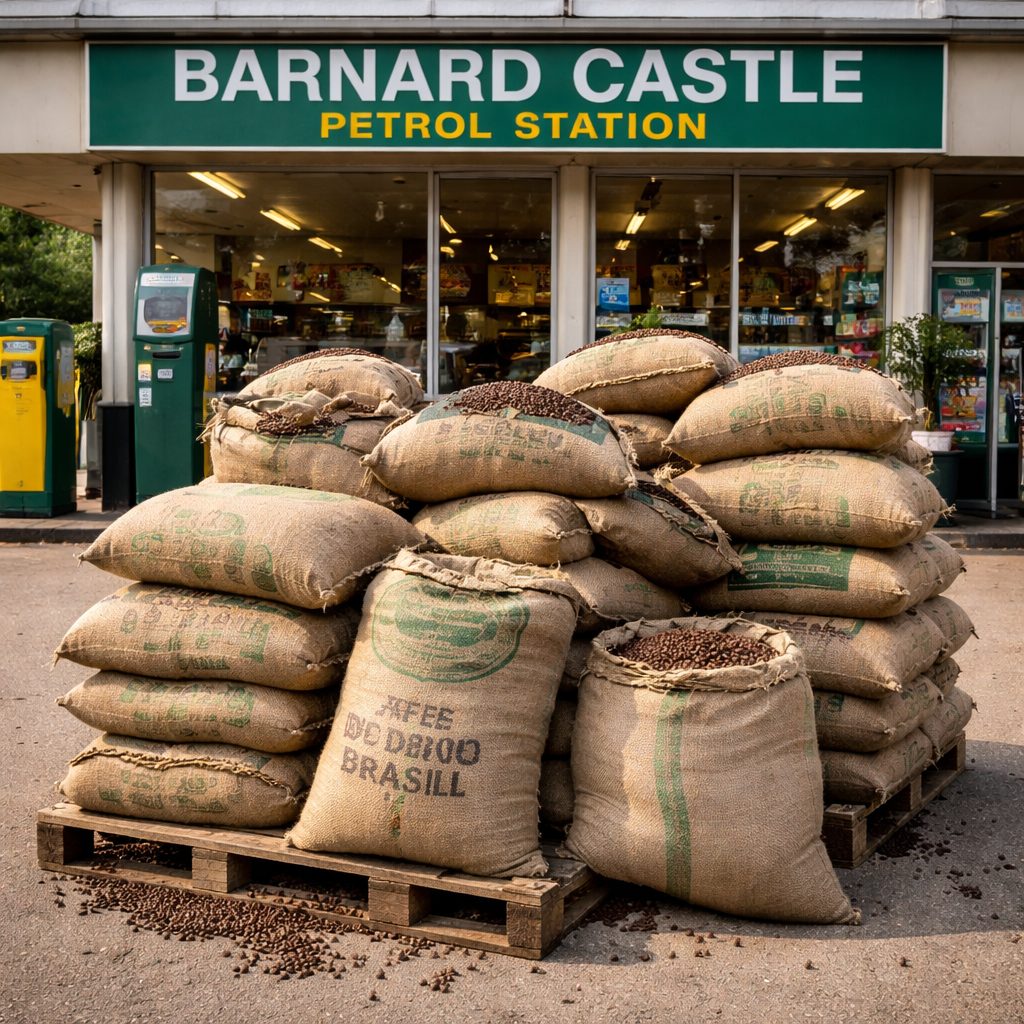
With current global events leading to sky-high fuel costs, we’ve had some fuel for thought. Working closely with some of our local garages and filling stations, we’ve been refining a new fuel which can be used to power regular petrol or diesel engines, with a little adjustment to the fuel delivery system.
“What is this miracle product?” I hear you ask.
Well, we all know the levels of energy we receive upon drinking our favourite morning brew. So it occured to me that coffee beans must have quite a concentration of untapped energy. In addition, when you roast green coffee beans, the combustion flashpoint provides even greater energy. Could we refine and process coffee beans to produce a liquid fuel capable of running an internal combustion engine? It turns out that, yes you can! With a little refining and filtering of the right beans, roasted the right way, then brewed at high concentraions, you can produce a combustable liquid, which reacts in a remarkably similar way to petrol, but for a fraction of the cost.

Car fueled by coffee
We’re now working with our coffee roasters, and local petrol stations to supply this incredible alternative fuel in liquid form from the forecourts. Initial tests have been received with positive enthusiasm. This has given us the confidence to release our Decaf fuel designed specifically for diesel engines.

But we know that even with these savings, you may want alternative options which will be even more budget friendly. This is why we are now working on a home refining kit. These counter-top devices will take whole coffee beans, and merely through a small heat lamp, generate sufficient fuel to drive the average car for approximately 100 miles. It requires no electricity, gas or oil to work, and can be left to process the coffee beans overnight, redy to add fresh to your fuel tank befopre the morning commute or the school run.

Coffee Fuel Home Processing Equipment
Coffee Fuel bags of beans can be purchased directly from Chocolate Fayre. However please note that these fuel beans should not be consumed as coffee, as the chemical changes brought about through the refining process can result in quite extreme bouts of flatulence.
Anyway, hopefully this will help many of you over the coming weeks and months. It’s certainly fuel for thought!